mclogit 0.4 published on CRAN

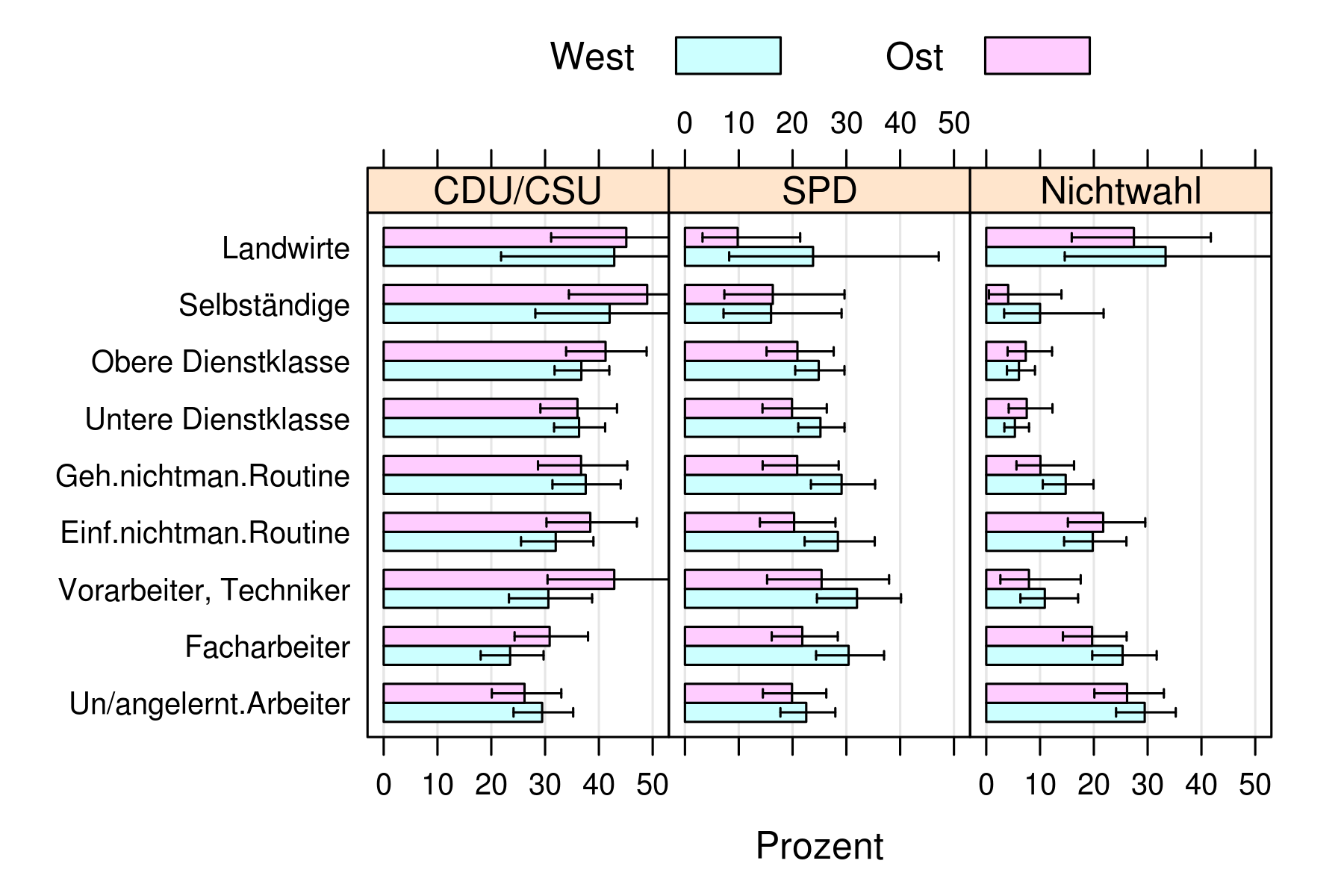
A chapter entitled "Parteiwahl und Nichtwahl: Zur Rolle sozialer Konfliktlinien" has appeared in Wahlen und Wähler: Analysen aus Anlass der Bundestagswahl von 2013 (ed. by Harald Schoen and Bernhard Wessels) and is now available from Springer.

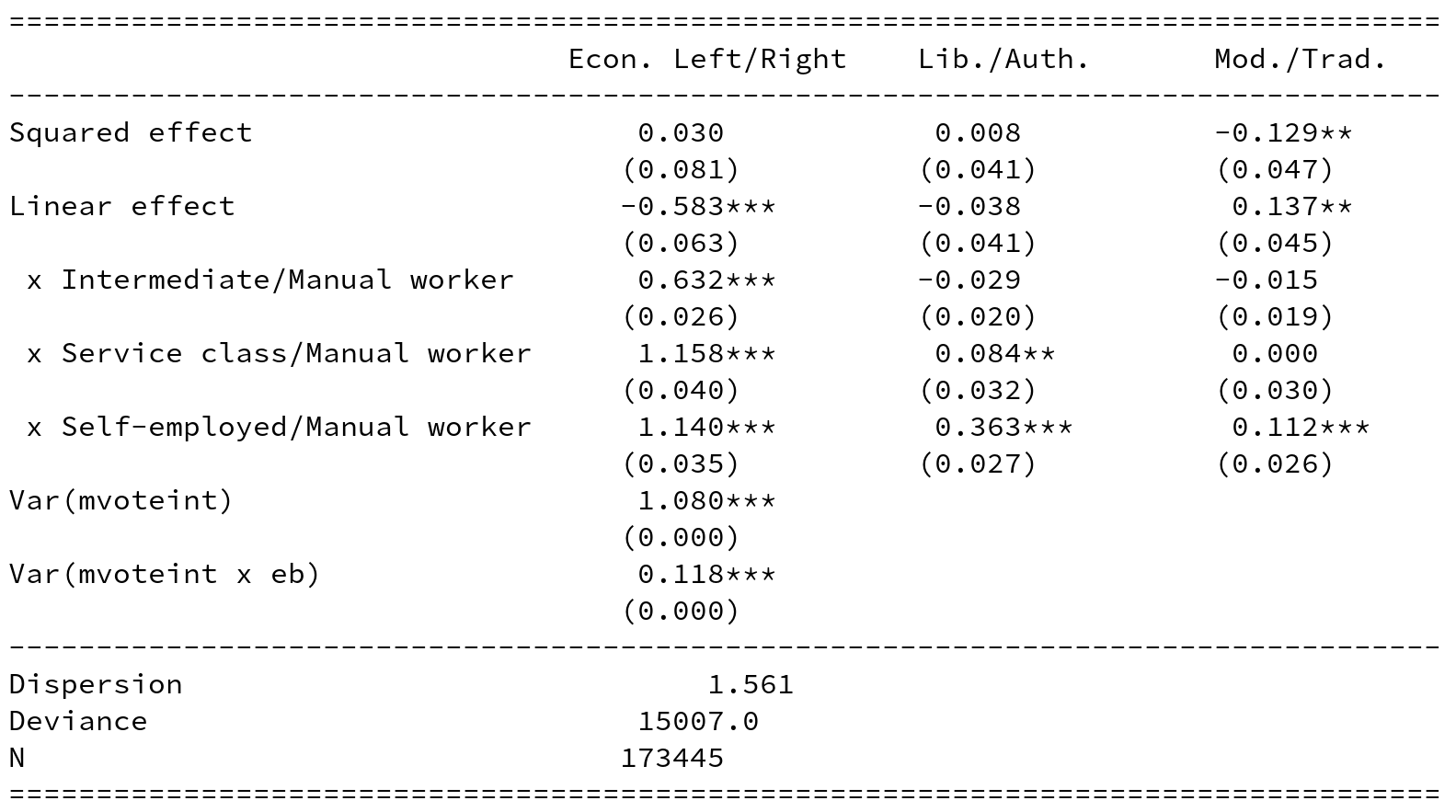
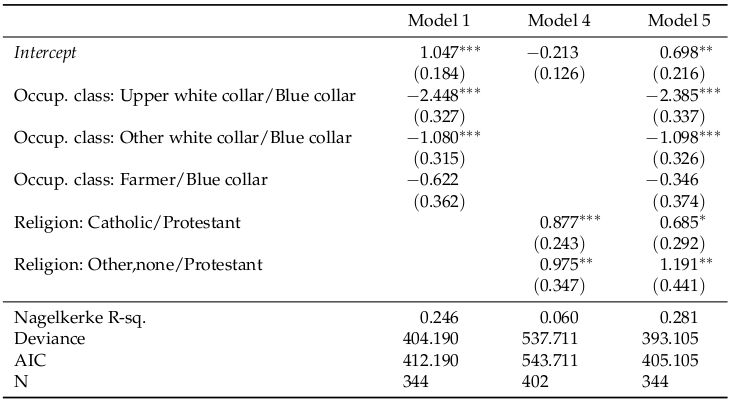
At the 5th Annual General Conference of the European Political Science Association I had the opportunity to present a paper entitled "The Crisis of Social Democracy and the Political Demobilisation of the Working Class in Germany". In this paper I analyse the dual decline of turnout in Germany and of the support for the German Social Democratic Party (SPD). I show that both changes are linked and concentrated in a core group of SPD supporters, the manual working class.

At the Session of the AK "Wahlen und politische Einstellungen (the German specialist group on election, electoral behaviour and political attitudes) I had the opportunity to present a paper on split-ticket voting in Germany. In this paper I find that there is more strategic voting in the direct candidate votes than in the list votes, but that most split-ticket voting appears to be non-strategic.

Estimates (or more correctly: predictions) of parties' positions in multiple dimensions in different countries, spanning the decades from 1945 (1920 for the USA) to 2010 is now available here on my website.

A chapter on estimation techniques has appeared in the edited volume Regression Analysis and Causal Inference, edited by Henning Best and Christof Wolf and published by Sage. A companion website is here.