memisc 0.99 published on CRAN
18 January 2016
18 January 2016
27 June 2015
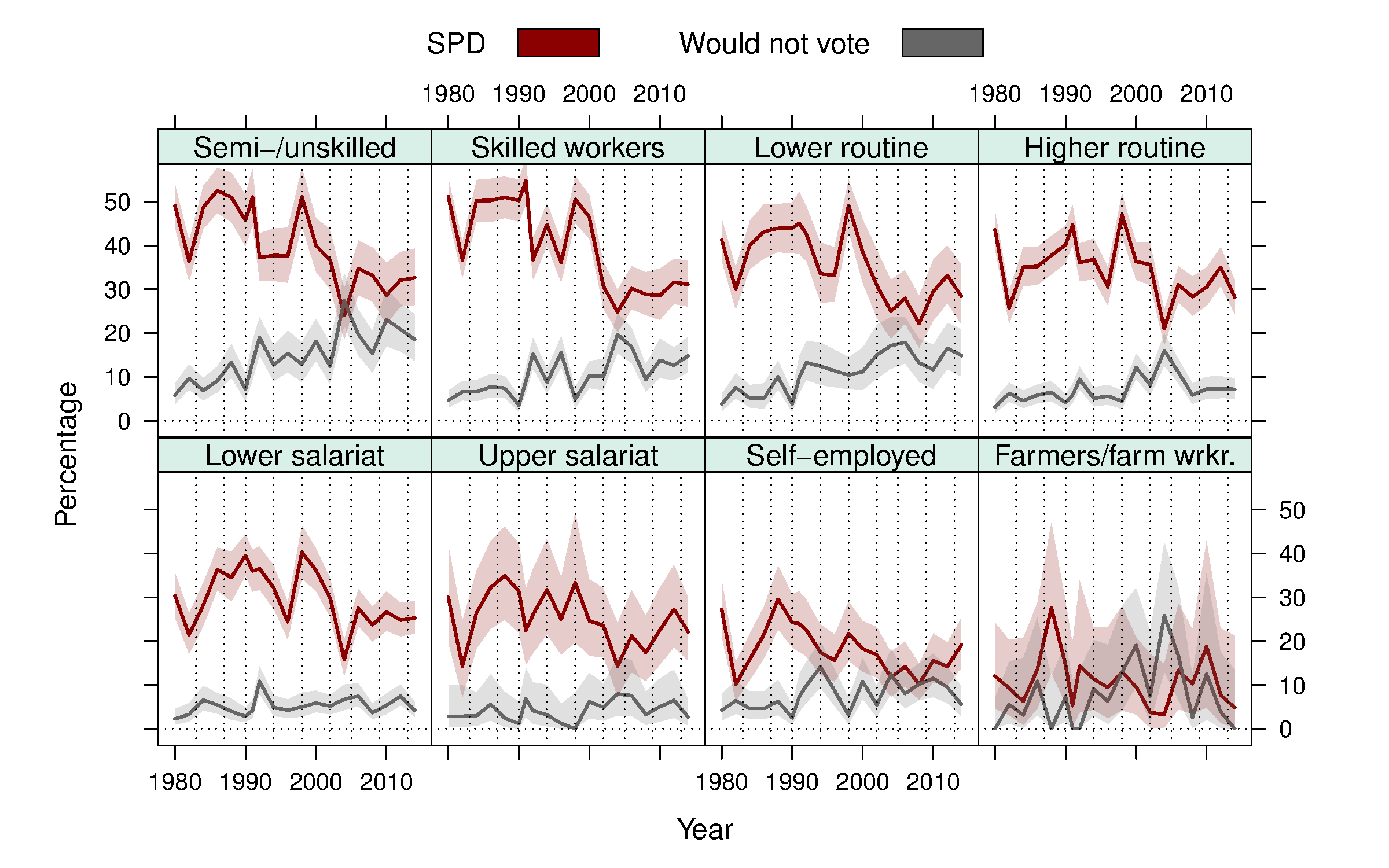
At the 5th Annual General Conference of the European Political Science Association I had the opportunity to present a paper entitled “The Crisis of Social Democracy and the Political Demobilisation of the Working Class in Germany”. In this paper I analyse the dual decline of turnout in Germany and of the support for the German Social Democratic Party (SPD). I show that both changes are linked and concentrated in a core group of SPD supporters, the manual working class.
12 June 2015
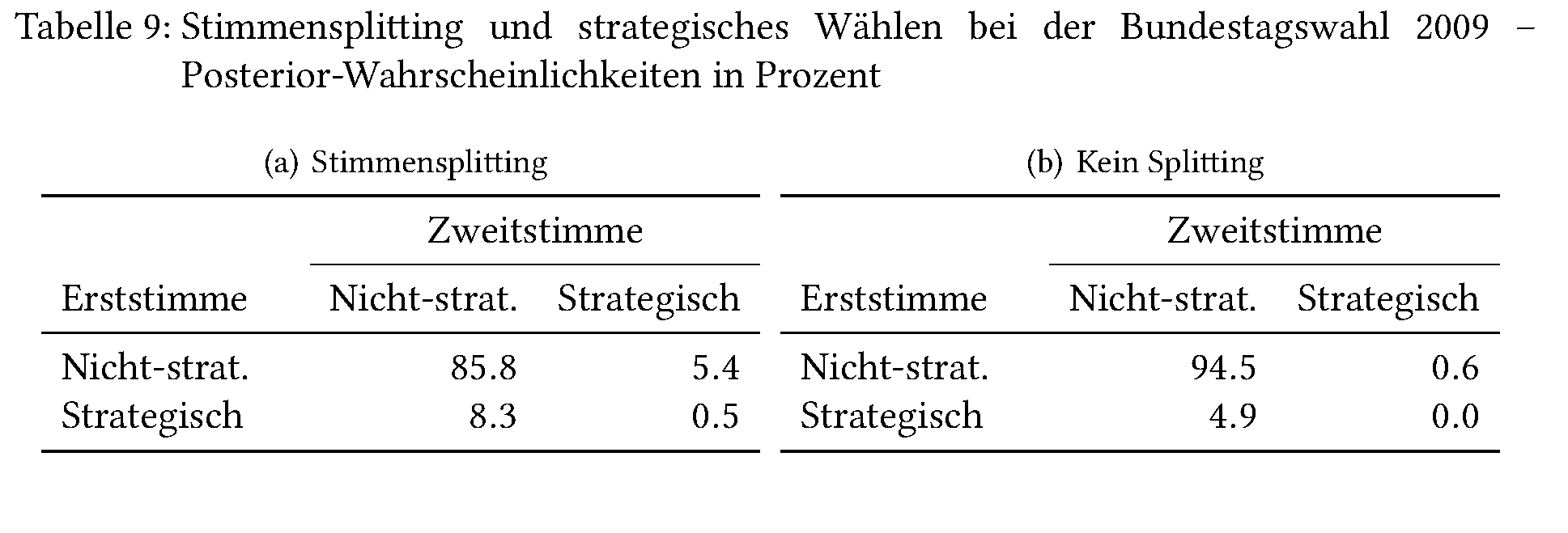
At the Session of the AK “Wahlen und politische Einstellungen (the German specialist group on election, electoral behaviour and political attitudes) I had the opportunity to present a paper on split-ticket voting in Germany. In this paper I find that there is more strategic voting in the direct candidate votes than in the list votes, but that most split-ticket voting appears to be non-strategic.
07 March 2015
05 November 2014
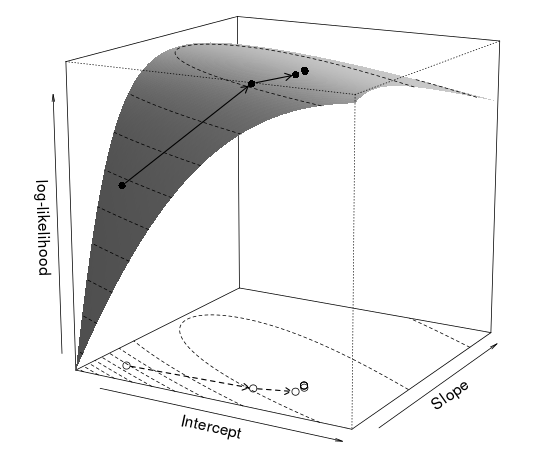
A chapter on estimation techniques has appeared in the edited volume Regression Analysis and Causal Inference, edited by Henning Best and Christof Wolf and published by Sage. A companion website is here.
05 November 2014
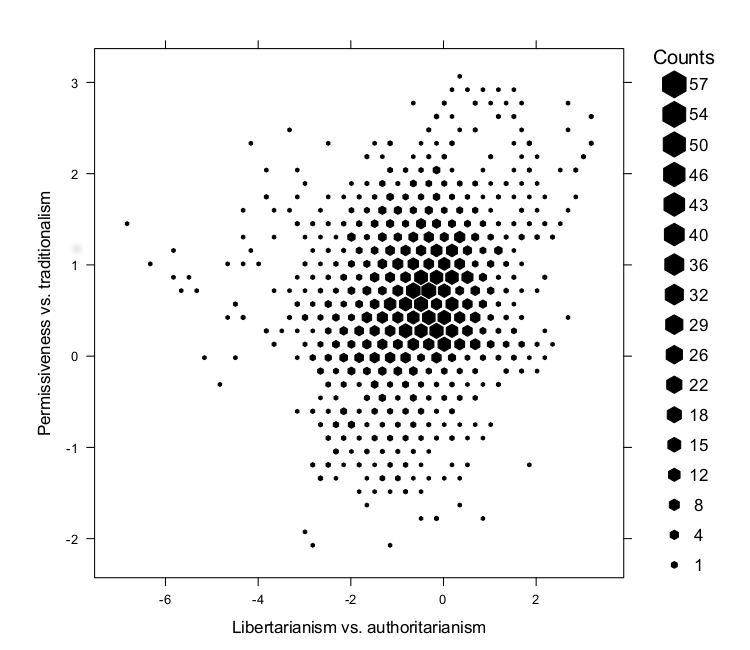
Estimates (or more correctly: predictions) of parties’ positions in multiple dimensions in different countries, spanning the decades from 1945 (1920 for the USA) to 2010 is now available here on my website.
21 June 2014
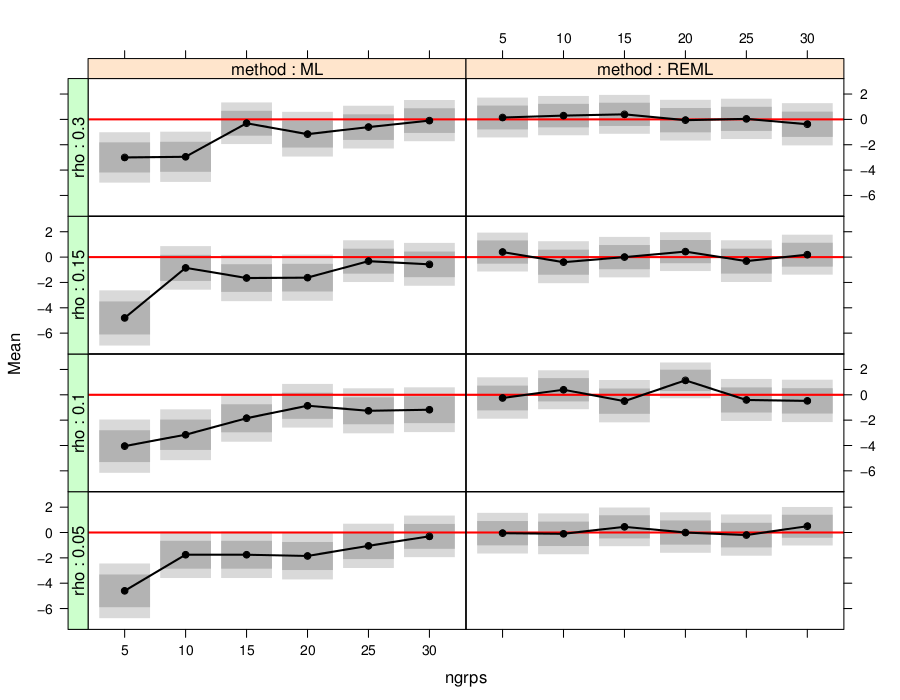
In a recent article published in AJPS it is claimed that Bayesian estimators have a superior performance in the estimation of the influence of group-level covariates, especially if the number of groups/clusters is small. In the paper presented at EPSA, we show that the problems addressed by Bayesian techniques can also be adequately addressed by a frequentist technique, restricted maximum likelihood, without the problems involved in Bayesian estimation, such as the computational cost and the need to select an appropriate prior.
06 April 2014
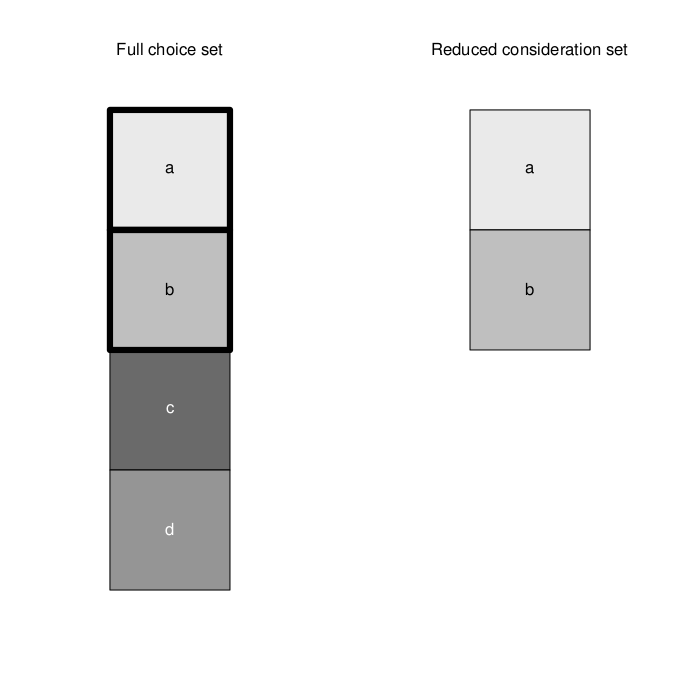
A paper entitled Separating Tactical from Sincere Voting: A Finite-Mixture Discrete-Choice Modelling Approach was presented at the Annual Conference of the Midwest Political Science Association 2014 in Chicago, Ill. It presents a novel approach to uncover tactical voting from responses in electoral survey studies. The basic idea is that the distribution of observed voting decisions is a finite mixture of non-tactical (aka sincere) and tactical voting decisions, where tactical voting decisions are characterised by choosing - in stead of the full choice set - from a restricted consideration set. This restricted consideration set then contains only those alternatives (e.g. parties’ candidates) that are considered viable by the voter in her respective constituency or voting district.